
Good restaurant inventory means three things: never running out, never over-buying, and knowing where every kilo went. Set a par level for each item, count costly items daily, and compare what the recipes say you used with what the count shows. A 2.5 kg daily gap in chicken at ₹320 a kg is ₹24,000 a month.
How to set a par level
A par level is the stock you want on hand just after a delivery arrives. Below it, you order; above it, you are tying up cash and risking waste.
| Paneer, example | Value |
|---|---|
| Average daily usage | 8 kg |
| Delivery every | 2 days |
| Safety stock, one day | 8 kg |
| Par level | 24 kg |
| In stock at order time | 10 kg |
| Order | 14 kg |
Review par levels every month, and before festivals or the wedding season, when usage jumps.
What to count, and how often
| Items | Examples | Count |
|---|---|---|
| Costly and fast-moving | Chicken, mutton, paneer, butter, cream, liquor | Every day |
| Fresh, short life | Vegetables, milk, curd, bread | Every day |
| Dry stores | Rice, flour, oil, spices, pulses | Every week |
| Packaging and cleaning | Boxes, bags, chemicals | Every week |
Count at the same time every day, before opening or after closing, and keep the store, kitchen and bar as separate places. Stock should move from the store to the kitchen only against an issue request, so you always know who took what.
First in, first out
- Date every delivery when it arrives.
- Put new stock behind old stock, on every shelf and in every fridge.
- Use what expires first, and check fridges at every closing.
Finding stock that goes missing
Stock variance is the gap between what you should have and what you counted.
| Chicken, one day | Kg |
|---|---|
| Opening stock | 20.0 |
| Received | 25.0 |
| Used as per recipes (dishes sold) | 27.0 |
| Should be left | 18.0 |
| Counted closing | 15.5 |
| Missing | 2.5 kg · ₹800 |
At ₹320 a kg, 2.5 kg a day is ₹24,000 a month from one item. Some of it is waste or bigger portions, some may be theft; the daily number tells you to look the same day.
Receiving and buying right
- Weigh and count every delivery against the order before signing.
- Enter the price from the bill, not from memory, so recipe costs stay true.
- Compare each item's price with other nearby suppliers before ordering.
- Combine orders across outlets to the same supplier for a better rate.
Stock you can trust, outlet by outlet
Peasily keeps separate stock for the store, kitchen and bar, moves stock only against issue requests, drafts orders from your par levels to the lowest-priced nearby supplier, and shows the gap between recipe usage and the closing count every day.
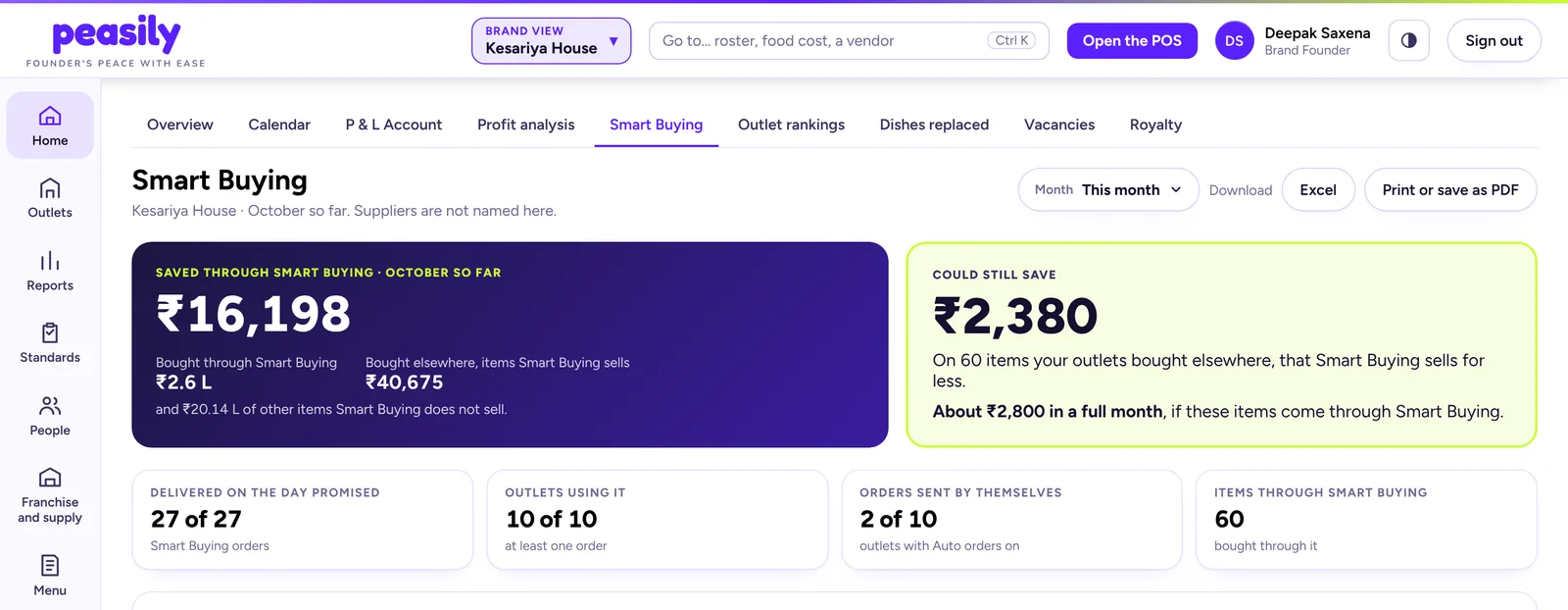
Stock and Smart Buying are in both Peasily packages. Screens from the Peasily demo brand.
Questions
How often should a restaurant count inventory?
Count costly and fresh items like chicken, paneer, dairy and liquor every day, and dry stores, packaging and cleaning items every week.
What is a par level in a restaurant?
The stock you want on hand right after a delivery: daily usage multiplied by the days until the next delivery, plus a little safety stock.
How do I know if stock is being stolen?
Compare what the recipes say you used with what the closing count shows, item by item, every day. A repeated gap on the same item, at the same outlet or shift, is the place to look.
See your own numbers in Peasily
We'll walk you through it with your real menu and outlets.