
Recipe costing means adding up the cost of every ingredient that goes into one plate, at today's purchase prices. It tells you what each dish really earns and what to charge. Example: a Butter Chicken that costs ₹142 to make and sells at ₹420 has a food cost of 33.9%.
How to cost a dish in six steps
- Write down every ingredient in one plate, in grams or millilitres.
- Take each ingredient's latest purchase price, per kilogram or litre.
- Work out each ingredient's cost: quantity × price.
- Add a small allowance for trimming and cooking loss, usually 3 to 8%.
- Add them up: that is the plate cost.
- Divide the plate cost by the selling price (before GST) to get the dish's food cost.
Worked example: Butter Chicken
| Ingredient | In one plate | Price | Cost |
|---|---|---|---|
| Chicken, boneless | 250 g | ₹320 a kg | ₹80.00 |
| Cashew paste | 20 g | ₹900 a kg | ₹18.00 |
| Butter | 30 g | ₹520 a kg | ₹15.60 |
| Fresh cream | 40 ml | ₹220 a litre | ₹8.80 |
| Tomato puree | 120 g | ₹40 a kg | ₹4.80 |
| Oil | 15 ml | ₹150 a litre | ₹2.25 |
| Spices and kasuri methi | — | — | ₹6.00 |
| Ingredients total | ₹135.45 | ||
| Trimming and cooking loss, 5% | ₹6.77 | ||
| Plate cost | ₹142.22 |
At a menu price of ₹420, the food cost of this dish is ₹142.22 ÷ ₹420 = 33.9%.
Setting the menu price from a target
If ₹474 is too high for your guests, change the plate instead: a little less cashew, or a better butter price, brings the cost down without touching the taste.
Why recipe costs go stale
A recipe costed once is wrong within weeks. Chicken, butter and cashew move every month, and every outlet pays a slightly different price. If cashew rises 10%, this plate costs ₹1.89 more. On 1,500 plates a month, that is ₹2,835 gone with no one noticing. Keep each dish's cost tied to the latest price each outlet actually paid.
Common recipe costing mistakes
- Costing from memory instead of weighing a real plate.
- Forgetting garnish, oil, gravy bases and packaging for delivery.
- Using last year's prices.
- Including GST in the selling price when working out food cost.
- Costing a dish once and never again.
Recipe cost that updates itself
Peasily keeps every dish's cost tied to the latest price each outlet actually paid, shows which ingredient moved it, and suggests a new menu price when food cost drifts off target.
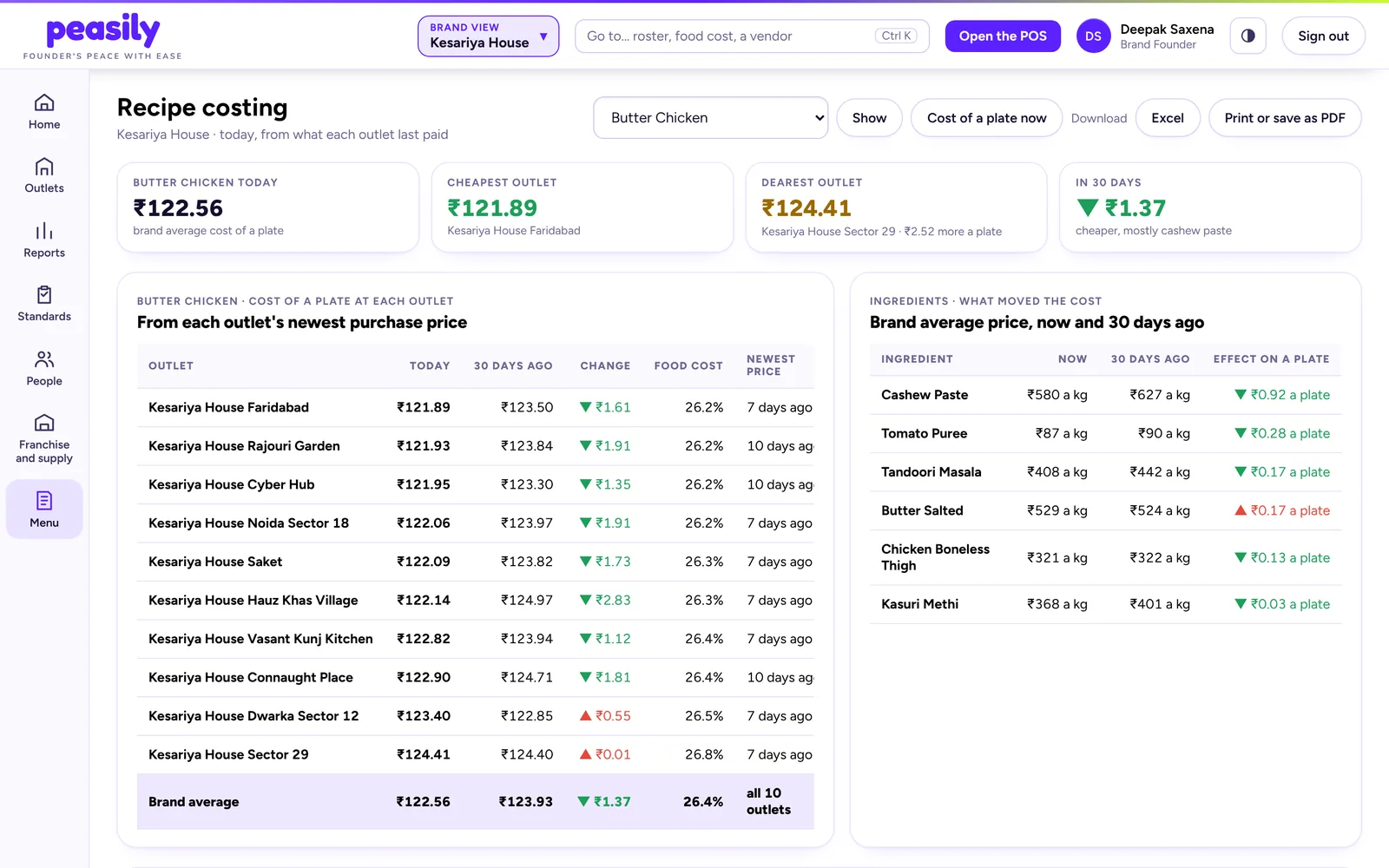
Recipes and live dish cost are in both Peasily packages. Screens from the Peasily demo brand.
Questions
What is recipe costing?
Recipe costing is adding up the cost of every ingredient in one plate at current purchase prices, so you know the dish's real cost, its food cost percentage and the right menu price.
How do I set a menu price from recipe cost?
Divide the plate cost by your target food cost. A plate that costs ₹142 at a 30% target should sell at about ₹474, before GST.
Can Hawks Dynamics cost our recipes for us?
Yes. The Hawks team can cost every recipe for you, once for the whole brand, or you can enter your recipes in Peasily yourself at no extra cost.
See your own numbers in Peasily
We'll walk you through it with your real menu and outlets.