
Most restaurant waste is spoilage, prep trim, overproduction, plate waste and mistakes. Record every item with a reason for two weeks, then fix the biggest reason first. Halving waste often lifts profit by a point or more of sales.
The five kinds of restaurant food waste
| Kind | Usual cause |
|---|---|
| Spoilage | Over-ordering, poor storage, old stock used last |
| Prep trim | Careless trimming, no plan for usable trim |
| Overproduction | Prep based on habit, not on expected covers |
| Plate waste | Portions too large, side dishes nobody eats |
| Mistakes | Wrong orders, burnt or dropped dishes, dishes sent back |
Measure it before you fix it
Keep a waste log at every station for two weeks: the item, the quantity, the reason and who recorded it. A tablet or a sheet on the wall both work; what matters is that every throw-away gets a reason.
After two weeks, add it up by reason. In most kitchens one or two reasons make up more than half of all waste.
What halving waste is worth
| Line | Amount |
|---|---|
| Food purchases in a month | 30,000 |
| Waste at 5% of purchases | 1,500 |
| Waste halved to 2.5% | 750 |
| Kept every year | 9,000 |
On monthly sales of 100,000, that is 0.75 points of net profit, from ingredients you were already paying for.
Eight steps that work
- First in, first out. Label everything with the date it arrived; older stock goes to the front.
- Order to par levels. Set a minimum and maximum for every item and order the difference, not a habit.
- Prep to the forecast. Prep lists based on expected covers for each day, not the same amount every day.
- Weigh portions. Scales and scoops at the pass; a few grams on every plate add up.
- Use the trim. Plan stocks, sauces, staff meals or specials around usable trim.
- Watch what comes back. If a side keeps coming back uneaten, make it smaller or optional.
- Record every mistake. A dish remade without a reason recorded is a loss without an owner.
- Review weekly. Ten minutes with the kitchen head on the top three reasons.
Try it on your own numbers: Food cost calculator, free and with no sign-up.
See it every day, not every month
Peasily records every waste and every replaced dish with a reason and an owner, compares actual food cost with what the recipes say, and orders from par levels so less spoils.
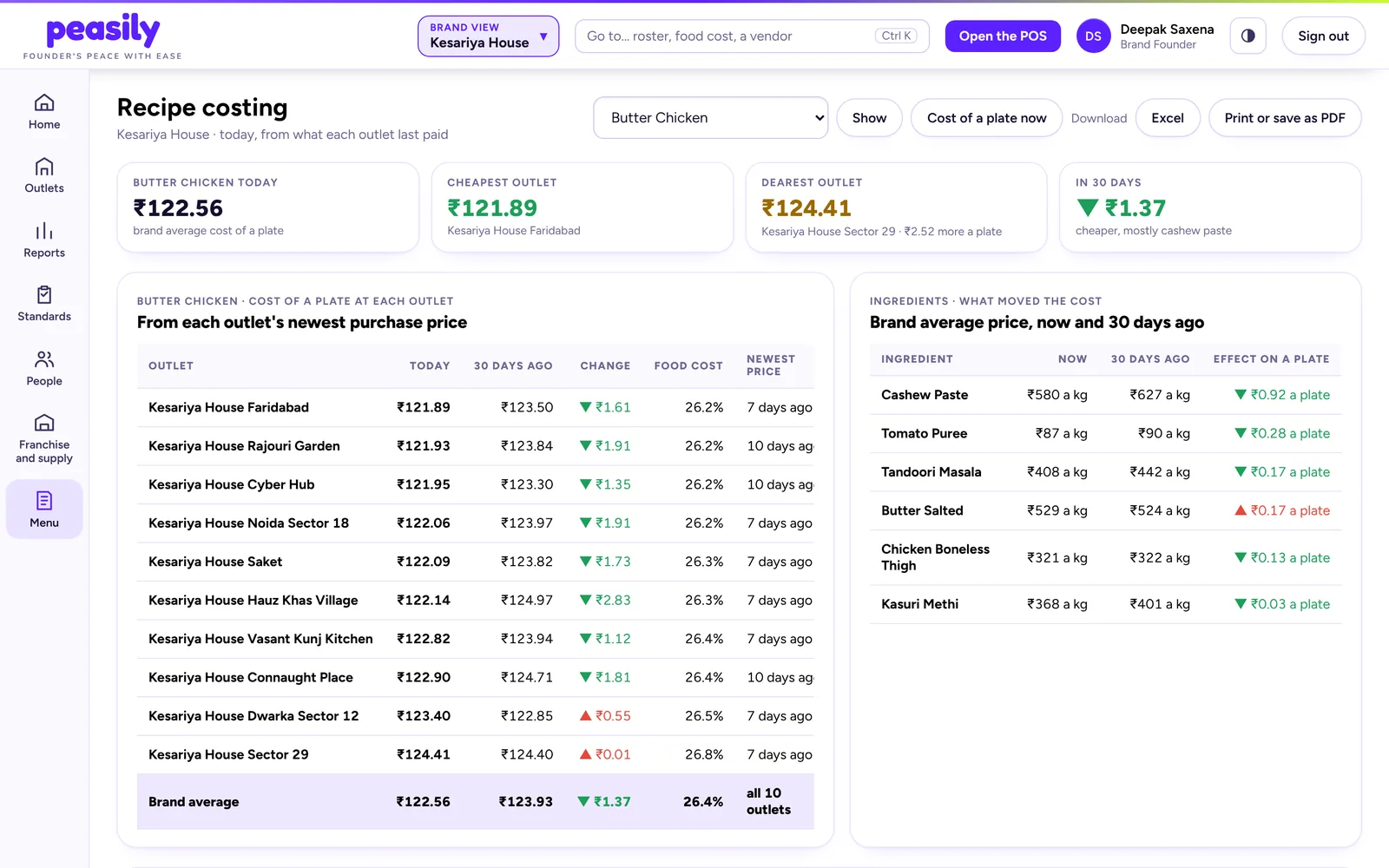
Screens from the Peasily demo brand.
Questions
How much food does a restaurant usually waste?
It varies a lot by kitchen and is rarely measured. Many kitchens that start a waste log find it is several percent of purchases.
What is the fastest way to reduce food waste?
Start a waste log with reasons. Most kitchens find one or two causes, such as over-prep or spoilage of a few items, behind most of the waste.
Does reducing waste really change profit?
Yes. Every item not wasted is an item you do not need to buy, so the saving goes straight to profit.
See your own numbers in Peasily
We'll walk you through it with your real menu and outlets.