
Prime cost is food and drink cost plus staff cost. In most restaurants it takes about 55 to 65% of sales. Everything else (rent, power, marketing and profit) has to fit into what is left.
What is prime cost?
Food and staff are the two largest costs in almost every restaurant, and the only two large costs you can change week by week. Rent is fixed by a contract; power moves with the weather. Prime cost puts the two that you control into one number.
What to include
| Part | Include |
|---|---|
| Food and drink used | Opening stock + purchases − closing stock, for food, bar and soft drinks |
| Staff cost | Wages and salaries, overtime, benefits and payroll taxes, staff meals, staff housing or transport you pay for |
Leave out owners who do not draw a salary, but note it: when you hire someone to do their job, prime cost will jump.
A worked example
| Line | Amount | Share of sales |
|---|---|---|
| Sales | 100,000 | 100% |
| Food and drink used | 31,000 | 31% |
| Staff cost | 30,000 | 30% |
| Prime cost | 61,000 | 61% |
This outlet has 39% of sales left for rent, power, marketing, repairs and profit. If prime cost rose to 66%, that would be 5,000 less every month, almost always straight out of profit.
What is a healthy prime cost?
| Prime cost | What it usually means |
|---|---|
| Below 55% | Strong, or a cost is missing |
| 55 to 65% | The usual healthy range |
| 65 to 70% | Profit under pressure |
| Above 70% | Little or no profit left |
Rough guides only. Full-service and fine dining often run a little higher because of staff; quick service and cloud kitchens lower.
How to bring prime cost down
- Close the gap between recipe and actual food cost. Portions, waste and missing stock usually explain it.
- Build rosters on real hourly sales. Move hours from quiet slots to busy ones instead of cutting people.
- Reprice the plowhorses. Popular dishes that leave little after ingredients pull the whole number up.
- Check it every week. Both halves can be fixed within days once you see them.
Try it on your own numbers: Prime cost calculator, free and with no sign-up.
See it every day, not every month
Peasily shows food cost and staff cost for every outlet every day in the P & L Account, so prime cost is visible the same week, not at month end.
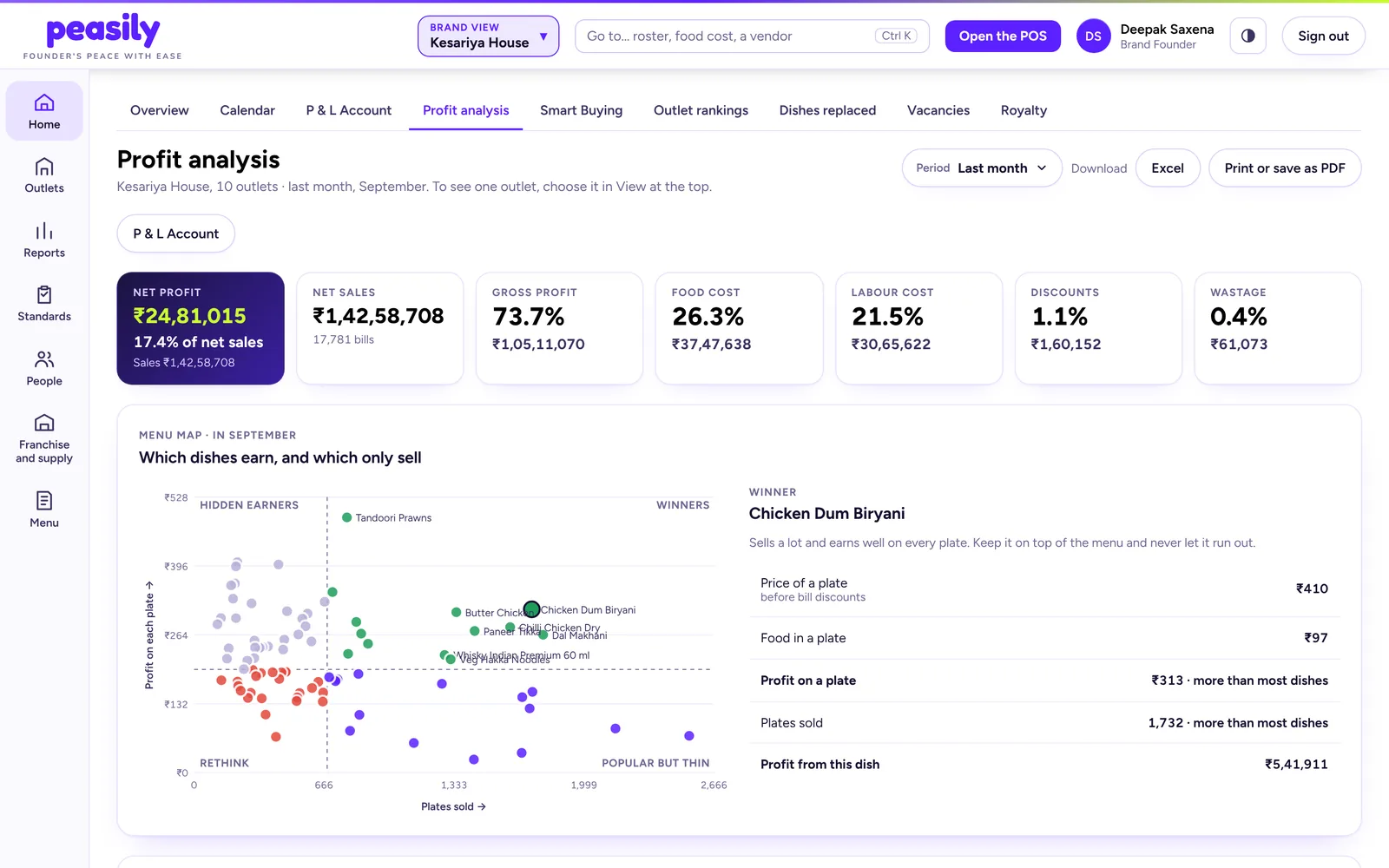
Screens from the Peasily demo brand.
Questions
What is a good prime cost for a restaurant?
Most restaurants aim for about 55 to 65% of sales. Above 65%, rent and other costs leave little room for profit.
Does prime cost include drinks?
Yes. Prime cost includes all food and drink used, plus all staff cost. Track food and bar separately inside it, so one does not hide the other.
Why is prime cost more useful than food cost alone?
Food and staff trade off against each other. Buying ready-made items lowers staff time but raises food cost; prime cost shows whether the trade was worth it.
See your own numbers in Peasily
We'll walk you through it with your real menu and outlets.